
 EN
EN




Plastic Coffee Dripper Case Study: From 95% Rejection to Stable Mass Production
From 95% Rejection to Stable Mass Production
How we solved a thick-wall moulding challenge for a home lifestyle e-commerce brand
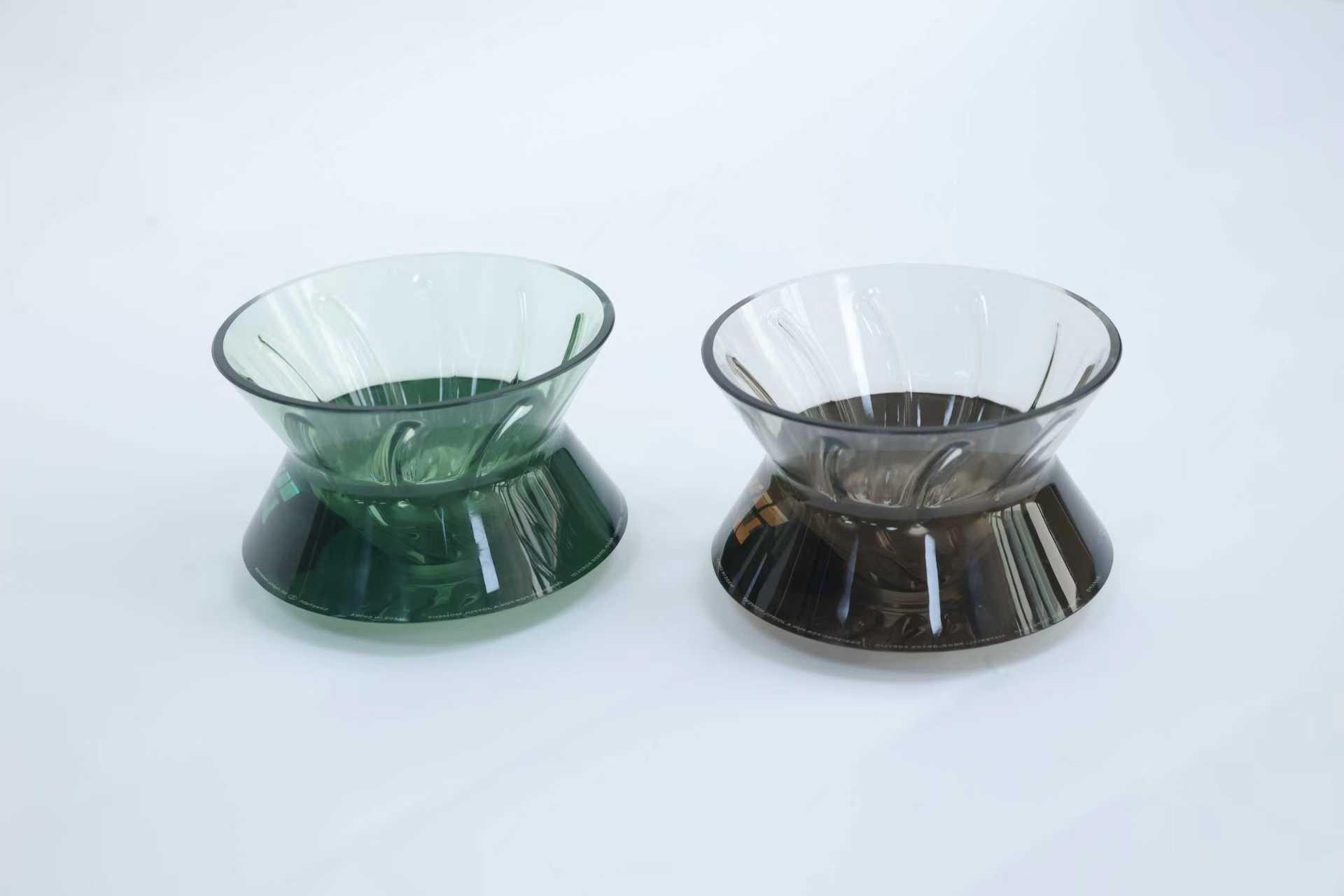
Our engineering team recently delivered a turnkey injection moulding solution for a premium plastic coffee dripper project, transforming a part that was nearly impossible to produce into a stable, high-yield mass production success. This case demonstrates how the right combination of process engineering, tooling expertise, material science, and post-mould innovation can turn a struggling project into a success story—and why choosing the right manufacturing partner makes all the difference.
The Challenge
Our client, a home lifestyle e-commerce brand, was preparing to launch a premium coffee dripper for the growing specialty coffee market. The product design featured an intentionally thick wall to achieve a premium feel and weight—a classic thick-wall injection moulding challenge that many manufacturers avoid due to the inherent difficulties involved.
The client had initially engaged another supplier who attempted to produce the part using a two-shot overmoulding process. The results were unacceptable. The rejection rate hit 95%, meaning nearly every batch was scrapped. The surface finish was poor, with visible weld lines and flow marks that made the product unsuitable for e-commerce platforms where high-resolution product photography is the primary sales tool.
What made this part particularly difficult was its highly deceptive aesthetic: The dripper is specifically designed to mimic the heavy, premium look and optical transparency of thick-walled colored glass, yet it is entirely made of plastic. Achieving this "fool-the-eye" glass-like clarity in a thick-wall injection moulded part without blemishes posed a severe engineering hurdle. A single imperfect image can undermine consumer confidence and damage brand reputation. The client needed a complete solution, not just incremental improvements.
A single imperfect image can undermine consumer confidence and damage brand reputation. The client needed a complete solution, not just incremental improvements.
They came to us.
Our Approach
We took a step back and reviewed the entire project from first principles. Rather than continuing with the problematic two-shot approach, we recommended switching to single-shot injection moulding. This would simplify the process, reduce cycle time, and eliminate the cosmetic issues caused by the overmoulding interface. More importantly, it would give us full control over every aspect of production—from mould design to final quality inspection.
We took full responsibility for mould design, material selection, process optimisation, and post-moulding handling. Our engineering team worked closely with the client to understand their aesthetic and functional requirements, then developed a solution tailored specifically to this part. The material selection alone required careful consideration—we needed a thermoplastic that could flow well enough to fill the thick cavity without excessive pressure, yet maintain dimensional stability and surface quality. We selected a material that balanced flowability with mechanical performance, ensuring both processability and end-use durability.
Our mould design incorporated several advanced features to support the thick-wall geometry. We optimised the gate location to promote balanced filling and minimise flow-induced stress. The cooling channel layout was carefully designed to provide uniform heat extraction, reducing the thermal gradients that drive warpage and internal voids. These design choices were validated through mould flow simulation before any steel was cut, allowing us to identify potential issues early and adjust the design accordingly.
The Difficulties
When we began our single-shot trials, we quickly encountered the three classic defects of thick-wall moulding. Void bubbles formed inside the thick section as the outer layer solidified faster than the core, creating internal cavities that compromised the part's integrity. Severe warpage occurred across the part due to uneven cooling and internal stress, causing dimensional instability that would affect fit and function. Obvious sink marks appeared on the aesthetic surface where the thick wall shrank during cooling, creating depressions that were visible and unacceptable for a premium consumer product.
Moreover, because the client demanded a highly transparent, glass-like visual effect, ordinary manufacturing imperfections like faint flow lines or micro-bubbles—which might be hidden in opaque plastics—were glaringly obvious here. The demanding optical requirements meant we had almost zero tolerance for any cosmetic defects.
Fixing one problem often made the others worse. This is the fundamental difficulty of thick-wall moulding—there is no simple solution, only a carefully balanced process. Increase holding pressure to eliminate voids, and the warpage becomes more severe. Reduce warpage by adjusting cooling, and sink marks become more pronounced. Optimise for surface quality, and internal voids return. The interdependencies between these defects create a complex optimisation challenge that requires deep technical understanding and systematic experimentation.
Our Solution
Our engineering team attacked the problem from two directions simultaneously.
First, we fine-tuned the injection process through a series of designed experiments, analysing the effect of fill speed, holding pressure, melt temperature, mould temperature, and cooling time. We identified the optimal process window that minimised shrinkage and internal stress at the source. This was painstaking work—each trial required careful measurement and analysis—but it gave us a solid foundation to build on.
Second, and most critically, we developed a proprietary post-mould cooling fixture—a precisely controlled external cooling station designed and built in-house. After ejection, the parts are placed into this fixture, which maintains accurate geometry and manages the cooling rate during the critical solidification phase. Unlike conventional cooling methods, our fixture applies targeted cooling to the thickest sections where heat is most trapped. This approach eliminates voids, prevents warpage, and ensures dimensional stability. The fixture was custom-engineered based on thermal analysis data and fine-tuned through multiple iterations.
This combination of process optimisation and post-mould innovation proved decisive. When standard approaches fail, we develop new ones—we don't give up on difficult parts.
The Results
After multiple validation rounds, we achieved breakthrough results. Internal quality: zero voids, fully eliminated. Surface quality: smooth, flawless finish, sink marks completely resolved. Dimensional stability: no warpage, all dimensions within drawing specifications. Production status: stable yield, smooth mass production, on-time delivery.
The client launched the product immediately upon receiving the first mass-production batch. Feedback from end-users has been positive, with particular praise for the product's premium feel and consistent quality. The dripper has since become one of the client's better-selling items in their home lifestyle category.
Why This Matters
For many manufacturers, thick-wall moulding is seen as high-risk and often avoided. This project demonstrates otherwise. With the right engineering approach and the willingness to innovate beyond conventional methods, even the most challenging parts can be produced reliably and cost-effectively.
This project also reinforces our commitment to taking full ownership—from initial design review through to mass production. By integrating mould design, injection moulding, assembly, and packaging under one roof, we eliminate the coordination risks and quality inconsistencies that often arise when multiple suppliers are involved. One partner, one point of accountability, one outcome: a finished product ready for market.
Project Snapshot
| Industry | Home lifestyle / E-commerce |
| Product | Plastic coffee dripper |
| Key challenge | Thick-wall moulding (voids / warpage / sink marks) |
| Our solution | Single-shot moulding + process optimisation + proprietary post-mould cooling fixture |
| Outcome | From 95% rejection to stable mass production |
Ready to discuss your project? We take on the challenges others avoid. Contact our team to learn more.
Related Projects
[Kitchenware Case] | [Thick-wall Moulding Case] | [E-commerce Brand Case]
[View All Projects →]